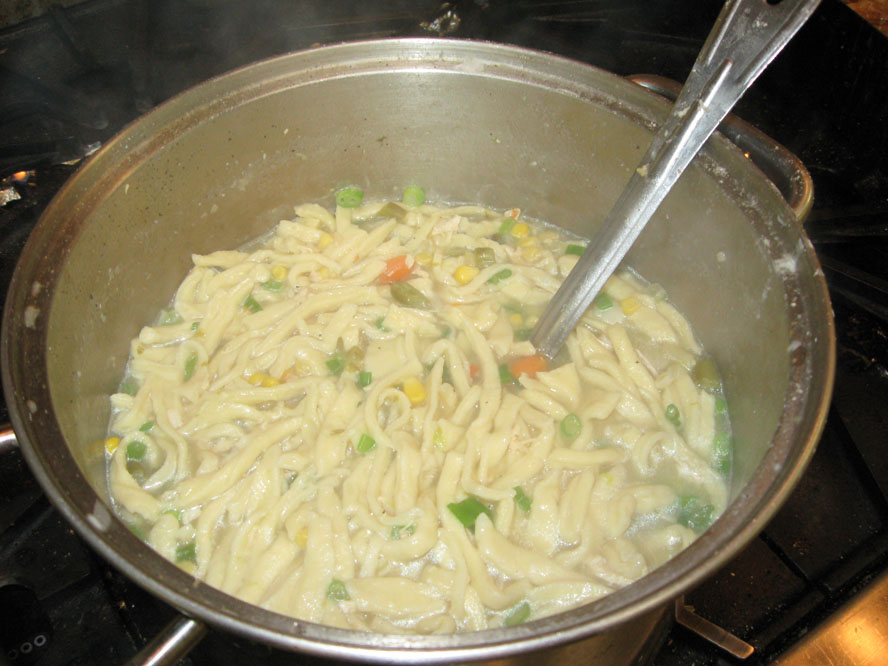
So easy to make and a great addition if your doing a turkey soup after Thanksgiving.
The Kitchen Project is an Amazon affiliate.
I receive a small commission from sales
from the Amazon Product Links on all the pages from The Kitchen Project
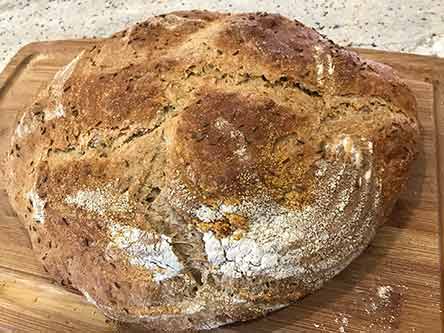
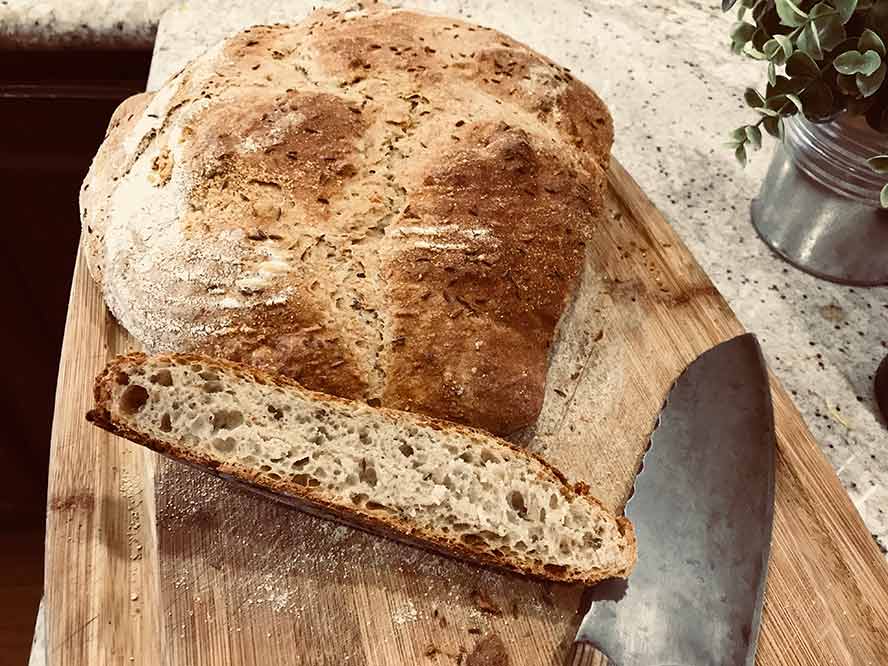
Making rye bread is an art that takes practice but truly worth the effort.
Why is this bread called Jewish?
The Jewish population that settled in New York made famous what are called "New York Delicatessens", with cured meats and rye breads that were native to where they came from in Germany.
There is no corn or cornmeal in this recipe, I believe it gets its name from the fact that in Germany Korn is the word for grain. This is a unique bread has a 48 hour starter using an onion half in it and a very "wet"dough that takes a little practice to get it into a loaf.
The loose dough makes the flavor better and a lighter crumb.
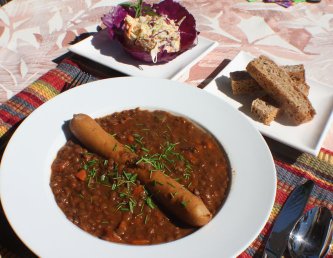
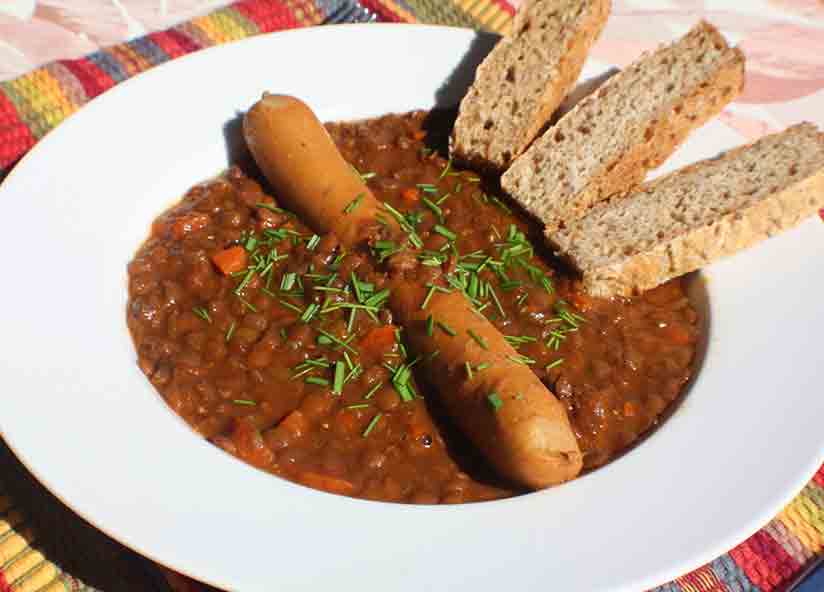
As the days get shorter and the weather turns chilly, there’s one dish that consistently brings warmth and comfort to the German table: Linsensuppe (lentil soup).
This isn't just a simple soup; it's a hearty, satisfying single-pot mea sometimes called " Eintopf".
A cherished staple of German home cooking for centuries.
I love the earthy taste of lentils,
Combine with
a medley of root vegetables like carrots, onions, and celery, and often enriched with a ham hock or some smoked meat.
a couple different touchs German recipes have is a final, balancing splash of vinegar and a touch of mustard, which cuts through the richness of the smoky meat and melds the flavors into perfect harmony.
This is a style done with lentil or pea soup in Germany.
You serve it with a nice big natural casing Frankfurter in the center.
Makes a delicious, full and satisfying meal .
Great memories thinking of this treat while driving in the
rain up to Grandma's house.
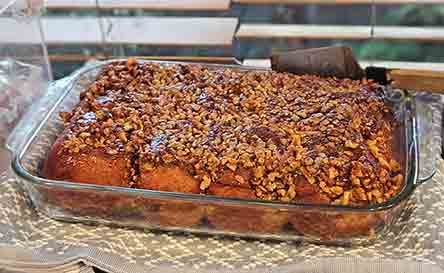
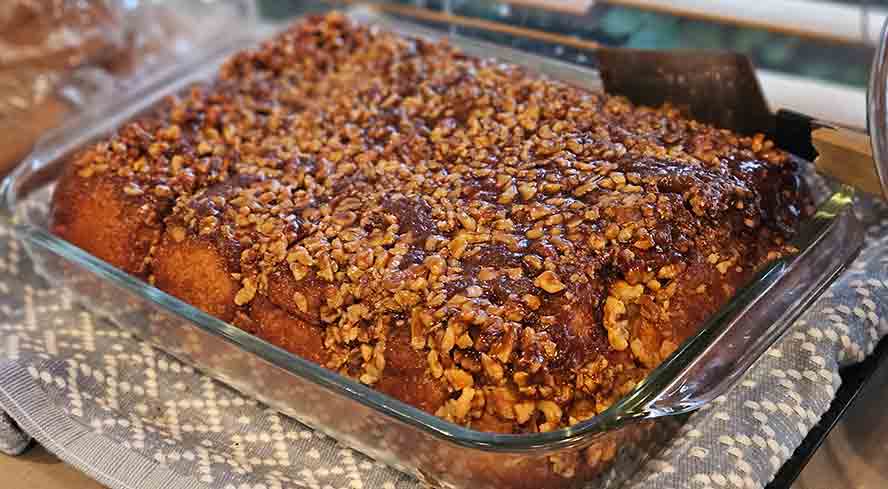
Yummy German "Snail Buns" ?
Did you know that the American cinnamon roll likely evolved from German baking traditions brought over by immigrants centuries ago? The original German treat is called a Schnecken, which literally means "snails" in German, named for its perfectly coiled, spiral shape resembling a snail when it bakes the layers getting larger each ring.
Now in the states sometimes the feature is the cream cheese frosting or nuts with a the sticky glaze.
In Germany, these sweet buns (sometimes called Zimtschnecken when they feature cinnamon) are less about the glaze and more about rich flavor, often incorporating ingredients like raisins, nuts, or even sour cream in the dough.
They are famously the inspiration for the American "sticky bun" or Pennsylvania Dutch "schnecken" and even share a linguistic link to the name "snickerdoodle" cookie! This recipe connects you to generations of German bakers who mastered the simple, heartwarming magic of cinnamon and butter.
This recipe is also uses a German and Pennsylvania Dutch style
using mashed potatoes in the dough.
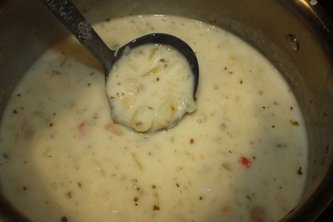
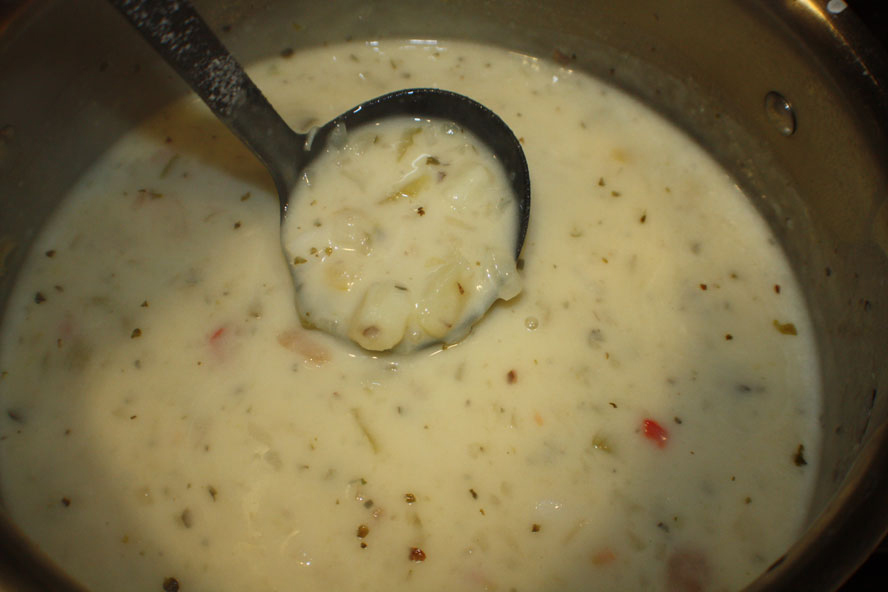
There are certain recipes that transcend their ingredients.
It is amazing how a simple potato and a few other vegetables in a soup stock
can bring such wondeful cherished memories.
Growing up when I came home from the park playing football, I remember the smell
of bacon and onions simmering with the potatoes filling grandma's big huge home
in Southeast Portland.
There are many variations if you took
a "Kartoffelsuppe Tour" around Germany you would find:
Northern Germany
Northern versions of the soup tend to be hearty and influenced by the nearby sea.
Ingredients: Often incorporate more local root vegetables like parsnips.
Coastal Additions: In coastal areas, the soup may feature smoked fish, such as herring or cod, instead of smoked pork.
Mecklenburg Style: A unique variation in Mecklenburg includes Kassler (cured and smoked pork) along with bacon and dried plums, offering a distinct sweet and savory profile.
Bremen Style: The version from Bremen is known for including bacon cubes and brown shrimp.
Southern Germany
In the South, the soup often takes on a different flavor profile and is sometimes served with sweet accompaniments.
Ingredients: Recipes often use paprika for flavoring and might incorporate Kassler (smoked pork).
Bavarian Style: Bavarian potato soup often features sauerkraut and caraway seeds, and is sometimes served with boiled beef.
Accompaniments: In regions like Baden and Swabia, it is traditional to serve the savory soup as a main course accompanied by something sweet, such as plum cake (Zwetschgenkuchen) or fried apple cakes (Apfelküchle).
Western & Central Germany
These regions emphasize smoked meats and sometimes incorporate a touch of acidity.
Westphalian Style: This version is known for generous amounts of smoked meats, often including a mix of Kassler and Mettwurst sausage.
Rhineland Variation: A common twist in the Rhineland is the addition of a splash of white wine to the broth for extra complexity.
Hessia Style: In Hessia, the soup is often seasoned with a dash of vinegar to achieve a distinctive sweet and sour taste.
Common Throughout
Across all regions, it is common to find the soup served as an Eintopf (a hearty one-pot stew) and garnished with the standard German "soup greens" or Supengruenen (carrots, celery root, and leeks). The consistency also varies from a chunky, brothy soup to one that is partially or fully pureed for a creamier texture.
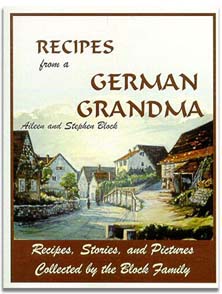
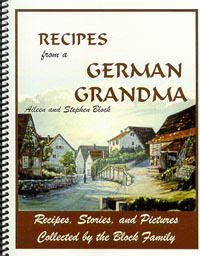
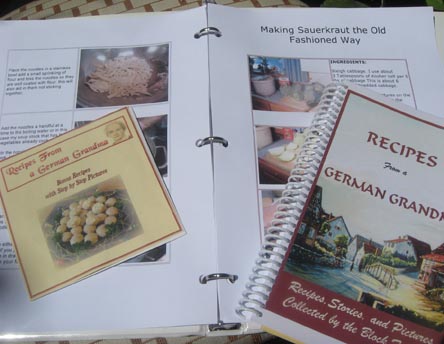
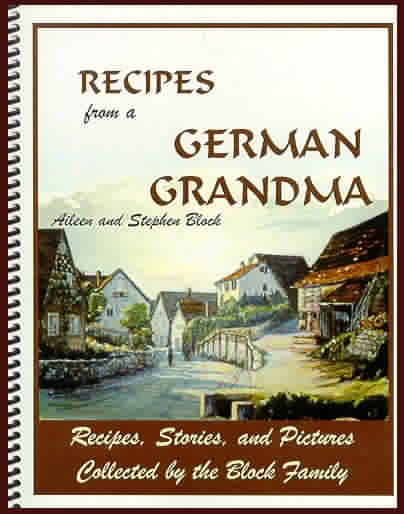
A recipe book and short biography of my Grandmother Emma Block. Her recipes, culture and cooking styles that were brought over from Germany. How they evolved when she came to America in the early 1900s and settled in Portland, Oregon on the west coast of the United States. Over 100 recipes
Bonus Recipes with the Ebook and recipes with step by step pictures
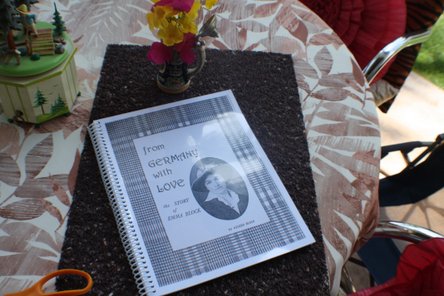
Biography of my grandma
Emma Block From Germany with Love tells the story of my grandma, Emma Block, growing up in a little town in Baden/ Würtemberg, Germany near Heidelberg named Steinsfurt. Then at the age of 15 immigrating to the United States, taking a train with one of her sisters and brothers to Hamburg and sailing the Atlantic with other hope filled Germans wanting to make a life in the "New World". It was not easy but with good values learned in her German upbringing made a full life, had a wonderful family with lots of fun and celebration including the great German meals.
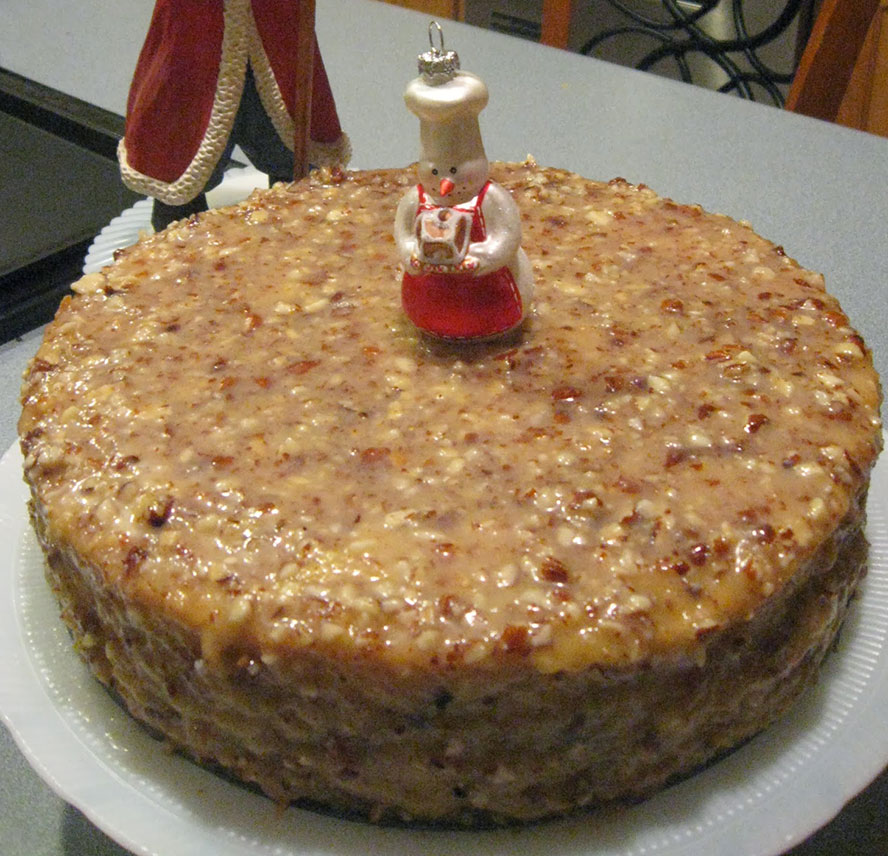
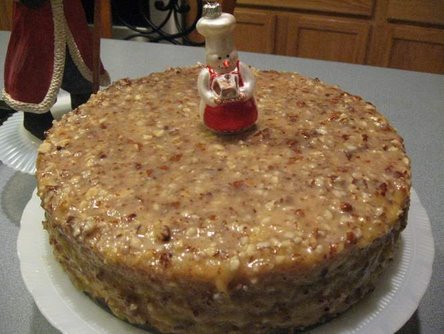
This cake is one my grandma would make for a special occasion
like a birthday or if we were celebrating around the holidays.
I am not sure where she learned it as it was not so much from her
native state of Baden, as it was from Frankfurt in Hessia.
Here is a history of the cake
The Frankfurter Kranz (Frankfurt Crown Cake) is a classic German cake with a history deeply tied to the city of Frankfurt's imperial past. It was created in the early 18th century to symbolize the city as the traditional coronation site for Holy Roman Emperors.
Origin and Symbolism
The cake is believed to have been created by an unknown master baker in Frankfurt around 1735. Its name and design are highly symbolic:
The Shape: The distinctive ring shape (baked in a Bundt or tube pan) represents a golden crown.
The "Jewels": The cake is covered in golden-brown almond frosting, which symbolizes gold, and is traditionally decorated with red cocktail cherries, representing rubies and other gemstones.however my grandma never put the jewels on it.
The Name: Kranz means "wreath" or "crown" in German, directly referencing Frankfurt's status as the "crown city" where German emperors were crowned from the 16th century onward.
So I am thinking my grandma didn't have a tub pan or Bundt pan when she made this
cake so she broke with that tradition.
The ingredients and presentation is undoubtedly fit for a king!
Through modern technology we can enjoy music from Germany at the touch of your computer, there are many venues now, Pandora, Amazon music, and Youtube is free.
I love my noise canceling headphones that are completely wireless and give incredible sound!
over 2500 perfect reviews, it is a bit of an investment but worth every penny.
German Music ~~~♫~~~♫~~~
SPITZBUA MARKUS - Mit a bisserl Fantasy
(Offz.JABEL ALpen-Welle VIdeo)
Muss i denn -
Heimat und Volkslied
History: A folksong written in the Swabian dialect about 1827 about a man who has to leave his lover but vows to be faithful and return to marry her.
Muss i denn, muss i denn
zum Städtele hinaus, Städtele hinaus,
Und du, mein Schatz, bleibst hier?
Wenn i komm', wenn i komm',
wenn i wiedrum komm',
Kehr' i ein, mein Schatz, bei dir.
Kann i glei net allweil bei dir sein,
Han i doch mein Freud' an dir!
Wenn i komm', wenn i komm',
wenn i wiedrum komm',
Kehr' i ein, mein Schatz, bei dir.
Wie du weinst, wie du weinst,
Dass i wandere muss, wandere muss,
Wie wenn d' Lieb' jetzt wär' vorbei!
Sind au drauss, sind au drauss
Der Mädele viel, Mädele viel,
Lieber Schatz, i bleib dir treu.
Denk du net, wenn i 'ne Andre seh',
No sei mein' Lieb' vorbei;
Sind au drauss, sind au drauss
Der Mädele viel, Mädele viel,
Lieber Schatz, i bleib dir treu.
Über's Jahr, über's Jahr,
Wenn me Träubele schneid't, Träubele schneid't,
Stell' i hier mi wiedrum ein;
Bin i dann, bin i dann
Dein Schätzele noch, Schätzele noch,
So soll die Hochzeit sein.
Über's Jahr, do ist mein' Zeit vorbei,
Da g'hör' i mein und dein;
Bin i dann, bin i dann
Dein Schätzele noch, Schätzele noch,
So soll die Hochzeit sein.
Do I have to, have to
Leave the city, leave the city
And you, my dear, stay here
When I come, when I come
When I come again, come again
I come, my dear, to your house
Can't I be with you for a while right away
I really enjoy you
When I come, When I come
When I come again, come again
I come, my dear, to your house
When you cry, when you cry
That I have to go
Like the love was over now
Even if there are, there are many girls out there
My beloved, I am faithful to you
Don't think that when I see others
My love for you would be over
Even if there are, there are many girls out there
My beloved, I am faithful to you
Over the year, over the year
When we harvest the grapes
I myself start to think
If I am still, I am still your beloved
We should marry
Over the year, my time is over
There I belong to me and you
If I am still, I am still your beloved
We should marry.



 \
\