A Quick Holiday Note From Our Kitchen
Today is Easter — and if I’m honest, I had planned to send you a beautiful spread of German Easter dishes, traditions, and stories. But life had other plans. A family crisis popped up, and I’ve spent the last few days helping move my daughter and grandson into our home.
Like spring itself, this season brings new beginnings, sometimes in ways we don’t expect. Our house is a little fuller, a little louder, and a lot more alive — and I’m grateful for that.
So instead of the big Easter edition I imagined, here’s a quick, joyful scroll of German‑American Easter fun.
Hopefully the scroll is like hunting for Easter eggs: small surprises tucked here and there for you to enjoy.
 
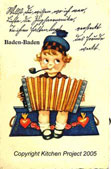
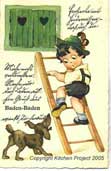
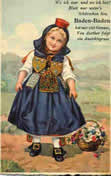
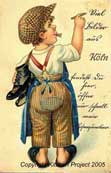
Some Beautiful Vintage German Easter Postcards.
Our German heritage shines through in these old Easter postcards, where the touch of Jugendstil turned simple holiday greetings into little works of art. Instead of the cheap, cartoonish cards many of us remember from mid‑century America, these images carried story, symbolism, and celebration.
They blended fine illustration with folklore — gnomes, rabbits, spring flowers, village life — creating a magical world where tradition and artistry lived side by side.
It’s a reminder that our roots are tied to a culture that treated even a postcard as a chance to share beauty, meaning, and a bit of wonder.

Did You Know?
The idea of a rabbit delivering Easter eggs is uniquely German.
Long before the bunny hopped across the Atlantic, the Osterhase was imagined as a shy, magical springtime helper who gathered, dyed, and delivered eggs to children.
German immigrants carried the tradition to America in the 1700s — and that’s how the Easter Bunny became a household name. Every postcard with a basket‑toting rabbit is a little nod to our heritage, where folklore, family, and spring magic all come together.
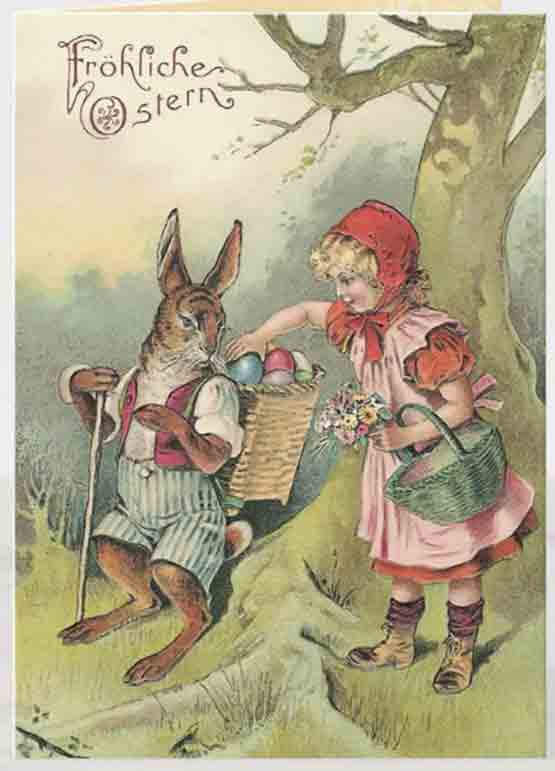
Did You Know?
In parts of Germany, children didn’t just wait for the Osterhase —
they helped him.
Kids would dye eggs, gather flowers, or prepare little gifts and place them where the rabbit was believed to pass.
Some folklorists think this early tradition of “helping the Easter Bunny” may be one of the roots of our modern American customs of dyeing eggs and making Easter baskets.
On many old postcards, like this one, the child is clearly giving eggs to the rabbit — a sweet reminder that Easter was once seen as a shared springtime project between families and the magical world of nature.
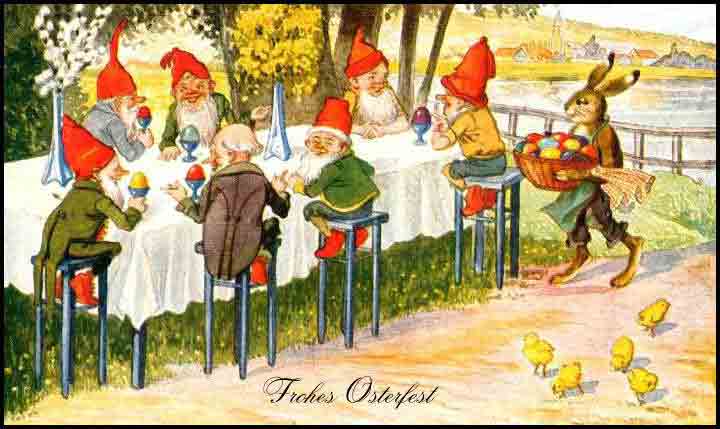
Why Gnomes?
Gnomes go back in German folklore farther back than the Easter Bunny
They were seen as mythical creatures that:
Small household Helpers
Protected your farm,
Worked at night and vanished by dawn
and helped usher in the spring, so they joined the Easter Bunny
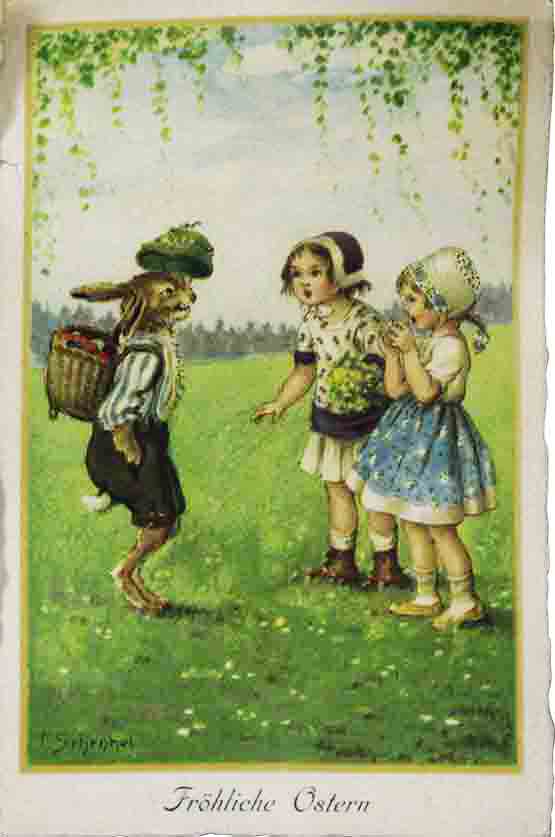
Did You Know?
Some of the oldest German Easter tales describe the Osterhase not as a cartoon bunny, but as a wandering spring spirit who traveled from home to home with a basket of eggs on his back.
Children hoped to catch a glimpse of him in the meadow at dawn — a lucky sign that spring’s blessings were on the way. Postcards like this one capture that gentle folklore moment: the magical rabbit on his yearly journey, and the children who happen to meet him on the path between the human world and the waking world of nature
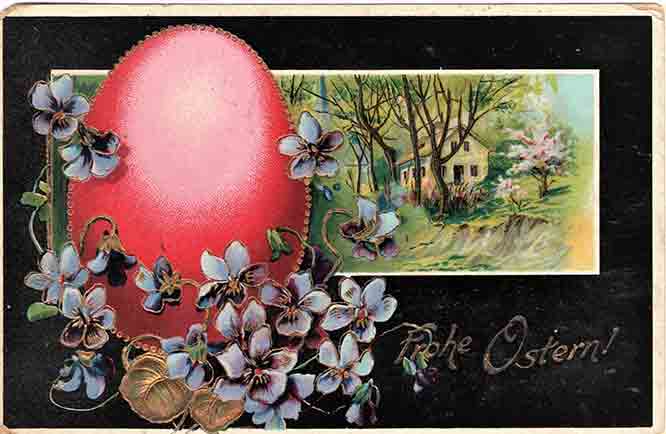
Did You Know?
The red Easter egg is the oldest color in German tradition. Long before pastel dyes and plastic baskets, a single red egg was believed to bring protection, blessing, and good fortune to the home. It symbolized spring’s return, new life, and the quiet magic woven through our folklore — a tiny treasure with centuries of meaning hidden in its shell.
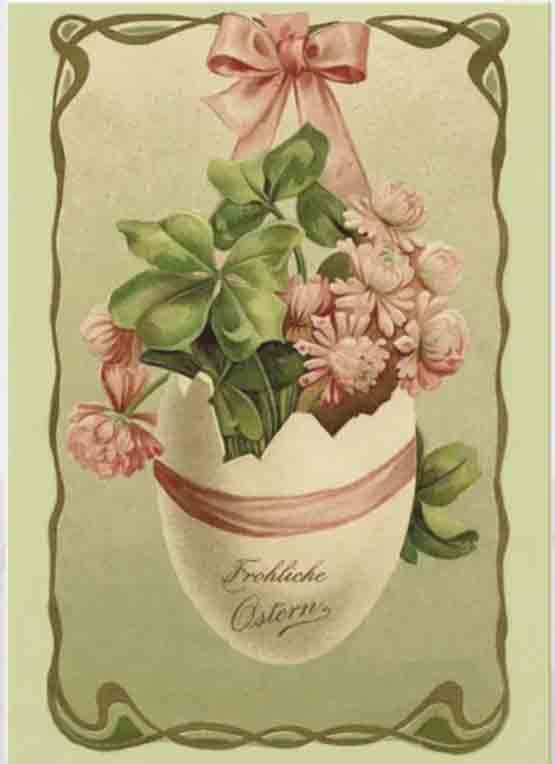
Did You Know?
In old German spring folklore, clover was a symbol of luck, blessing, and protection — and a cracked Easter egg represented new life breaking open.
When artists tucked clover inside a broken egg, they were creating a little visual charm: a wish that the new season would bring good fortune, renewal, and gentle blessings to the home.
It’s one of the softest pieces of Easter symbolism — a tiny springtime gift wrapped in folklore.
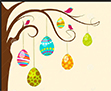

Did You Know?
The Osterbaum — the Easter egg tree — comes from one of the oldest spring customs in German tradition. Long before modern displays, families hung decorated eggs on branches to welcome the return of light and to bless the home with renewal, luck, and protection.
The egg symbolized new life, the tree symbolized strength, and together they formed a little “Tree of Life” for Easter. Today’s colorful egg trees are a joyful revival of that ancient spring magic.
The German tradition of the
Rolling Burning Wheel
called the
Osterräderlauf
(Easter Burning Wheel Run)
While many think of Easter baskets on Easter, I think of
FIRE!
But in a good way.....

When I see that great burning wheel racing down a hillside, I can’t help but think that some of my far‑off ancestors — thousands of years ago — watched fire the same way: as the first bright sign that spring had finally come back to the world.
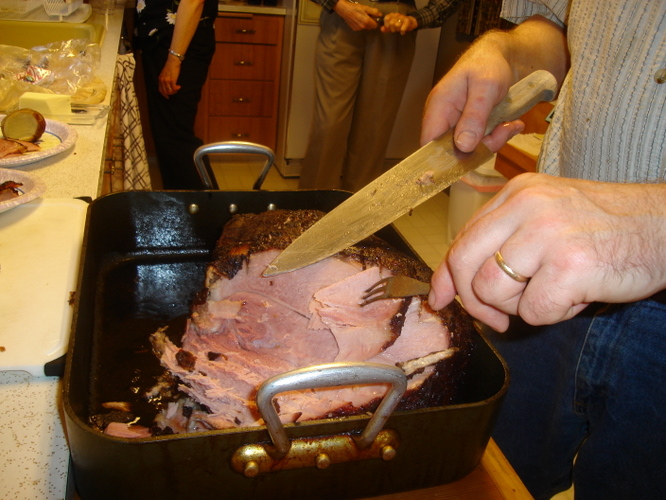
Easter BBQ Ham
Fire is one of the oldest parts of nature we’ve ever understood, and for me it’s tied to cooking, gathering, and celebrating. I don’t have a hill to roll a flaming wheel down, so this morning I’m honoring the tradition in my own way: slow‑roasting a big ham over wood on the BBQ, letting the smoke rise, and thinking about what the coming of spring meant to the people who came before me.

Sparks a flying.
I keep water close by
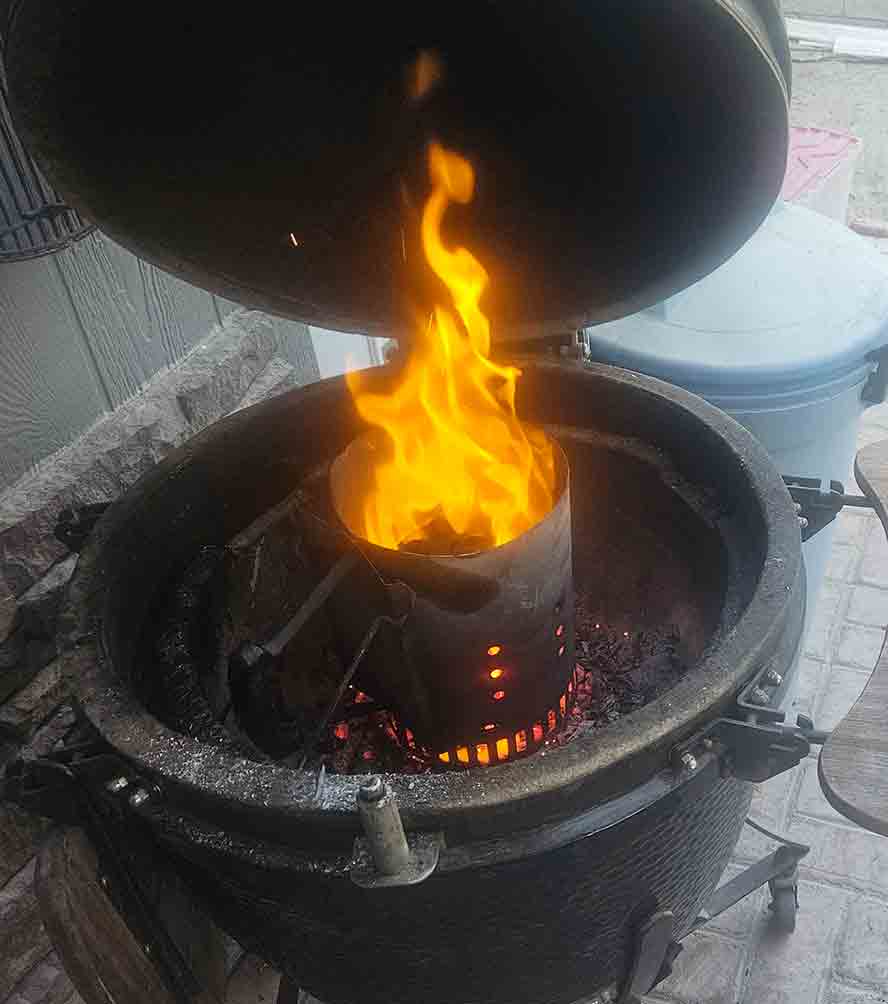
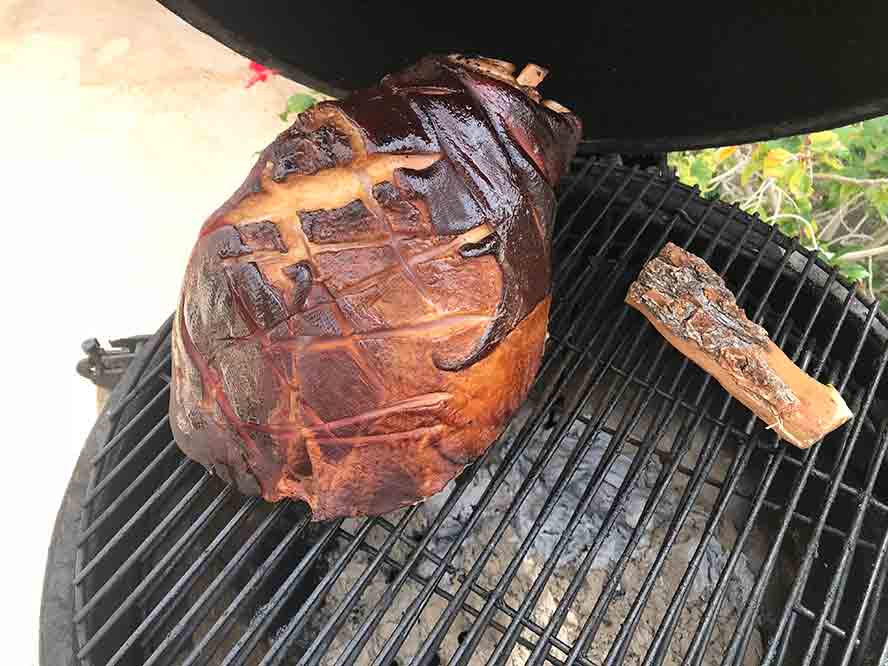
I never feel there is enough smoke on the ham, so I start it early and slow smoke it on the bbq
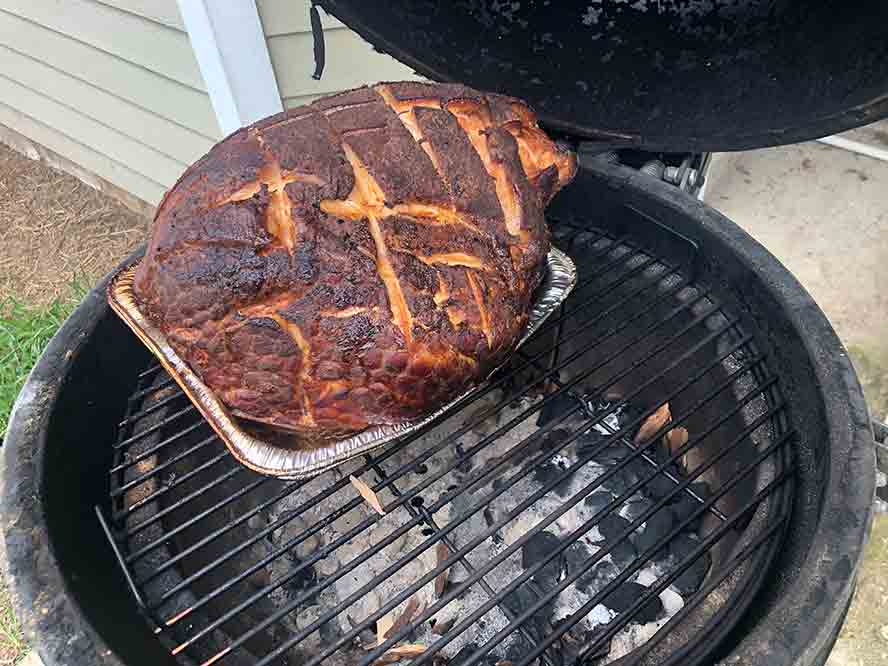
This will take 8 hours or so to really get a good smoke flavor.
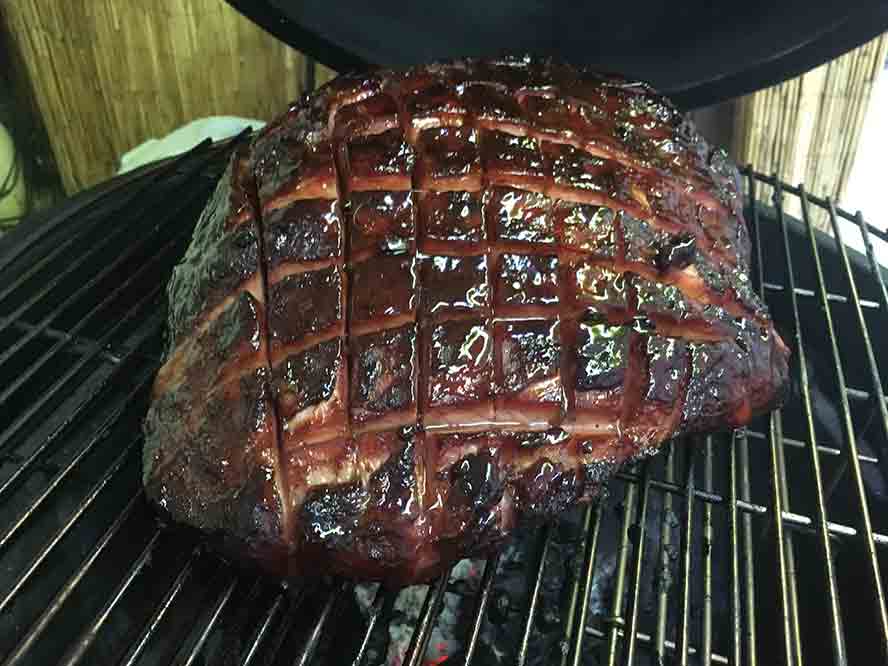
If I do this on the bbq the glaze comes in the last hour. I don't want it to burn.
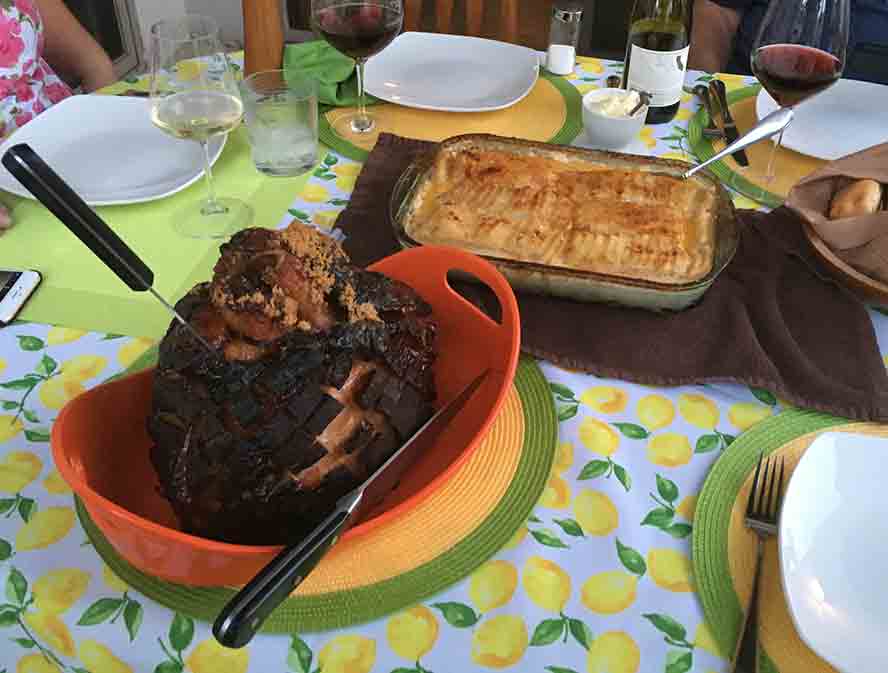
However you may want to roast the ham traditionally in the oven like my grandma did.
Braised in red wine
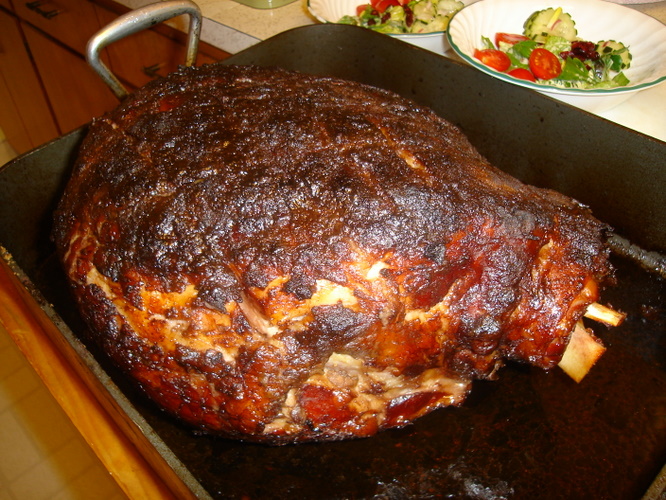
Go Here to make my
Grandma Emma's Easter Ham
With
Step by step pictures
|