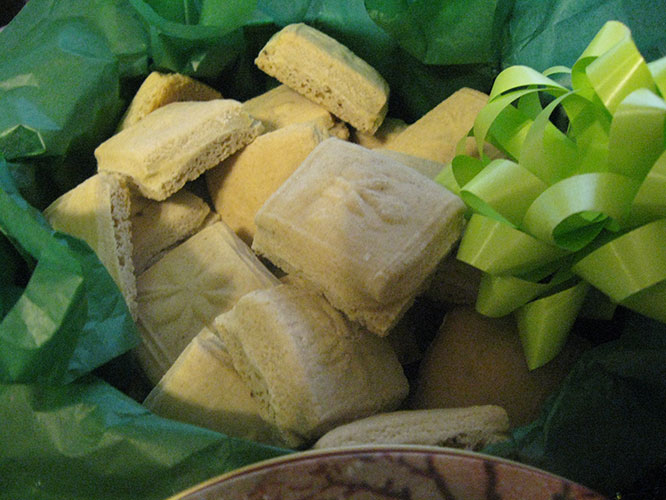
A Brief History of Springerle
Springerle was invented in the 15th century in Swabia as "edible greeting cards" and tokens of affection. These intricate, anise-flavored biscuits originated as a luxury for the wealthy, used to announce significant life events like births, weddings, and betrothals.
Early molds often depicted biblical scenes to educate those who could not read, while later designs shifted toward romantic imagery like flowers and landscapes. The name itself, meaning "little jumper" or "little knight," likely refers to the popular motif of a leaping horse or the way the dough "springs up" during baking.
This tradition was so deeply cherished that German immigrants frequently made room in their limited luggage for their heavy wooden molds, ensuring the legacy of these festive treats would endure in their new American homes.
More on the History of Springerle |
Ingredients:
(You will need a wooden Springerle mold or carved rolling pin to make the designs in the dough.)
4-5 cups Flour (500g – 625g)
3 cups White Sugar (600g)
5 extra large Eggs, 6 if they are smaller (~300g)
1 tsp. Baking Powder (5g)
1 tsp. Salt (6g)
2 Tbs. Anise Seed (13g)
Optional Ingredients:
1 Tbsp. Ground Anise (6g)Peel from 1 lemon grated (~6g)
1 tsp. Baker's Ammonia (4g)
1/4 cup Butter or Vegetable Oil (57g or 54g)
*Note: A cup of flour can vary 15 grams depending on how you scoop it. A better way is to spoon it into the cup so you don't pack it.
This recipe makes about 2 dozen cookies
One modern innovation is the use of non-stick spray to keep the dough from sticking to the rolling pin or wooden mold.”
We always remember these Springerle as being great when dunked in coffee!
printer friendly
|
Our German Heritage Recipe Cookbook
~~~~~~~~~~
Kitchen Tool Discussion
The Kitchen Project receives a small commission on sales from Amazon links on this page.
Full Affiliate Disclosure Policy |
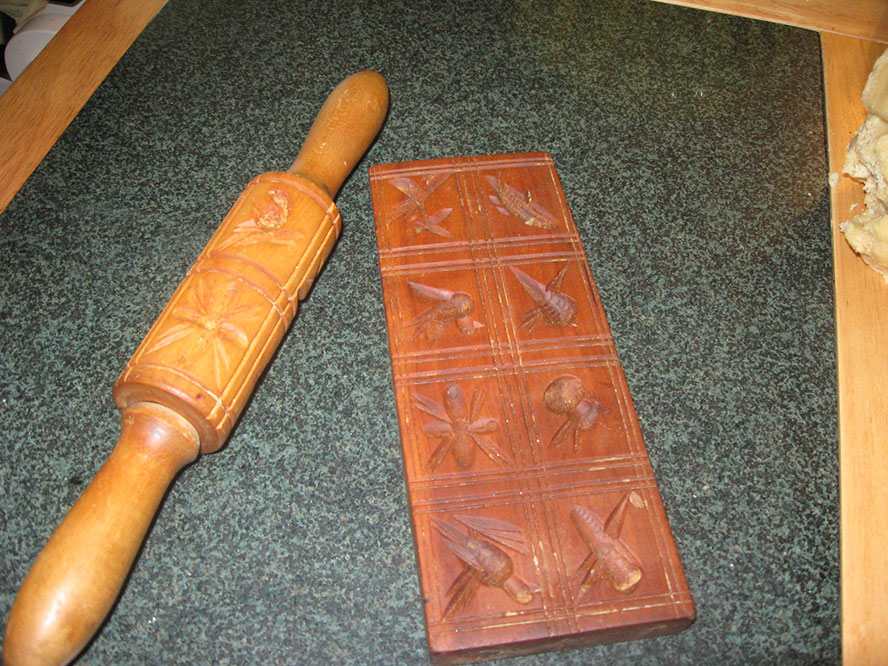
Here is my grandmothers Springerle Mold and Springerle Rolling Pin. Both are over 100 years old. They won't end up on Ebay. If no one wants them they will go to the grave with me.
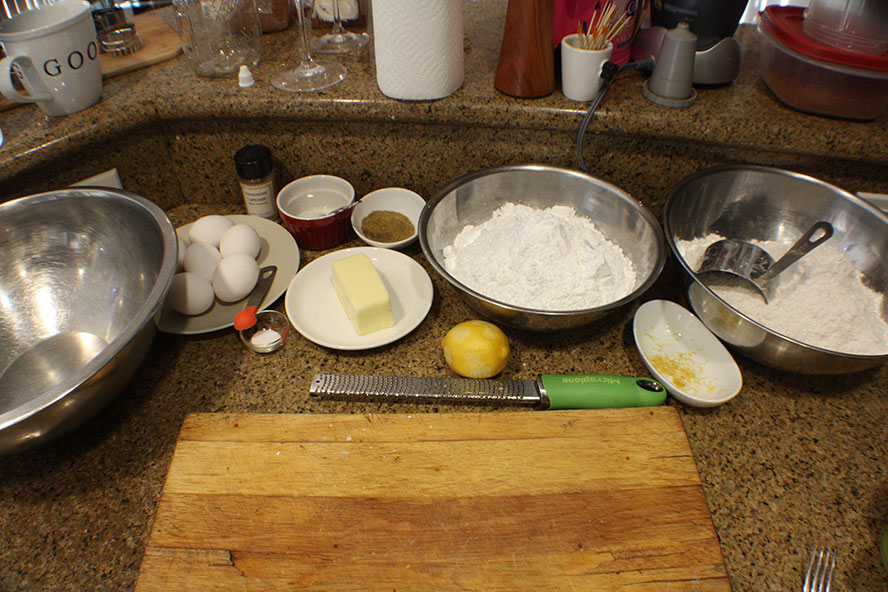
Gather your ingredients. I use 6 eggs here because they were not extra large.
The lemon peel gives a little added flavor as does the ground anise seed.
Also if you add the teaspoon of Baker's Ammonia it adds a tender crisp texture
Butter or oil will make the Springerle a little more tender.
|
|
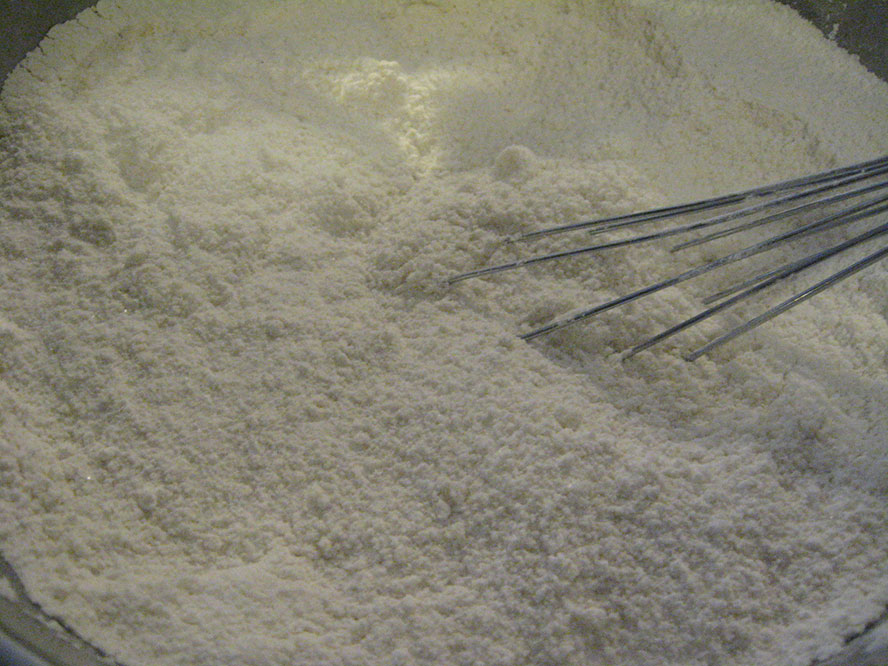
| I mix the dry ingredients together in a bowl. They add better to the liquid ingredients. |
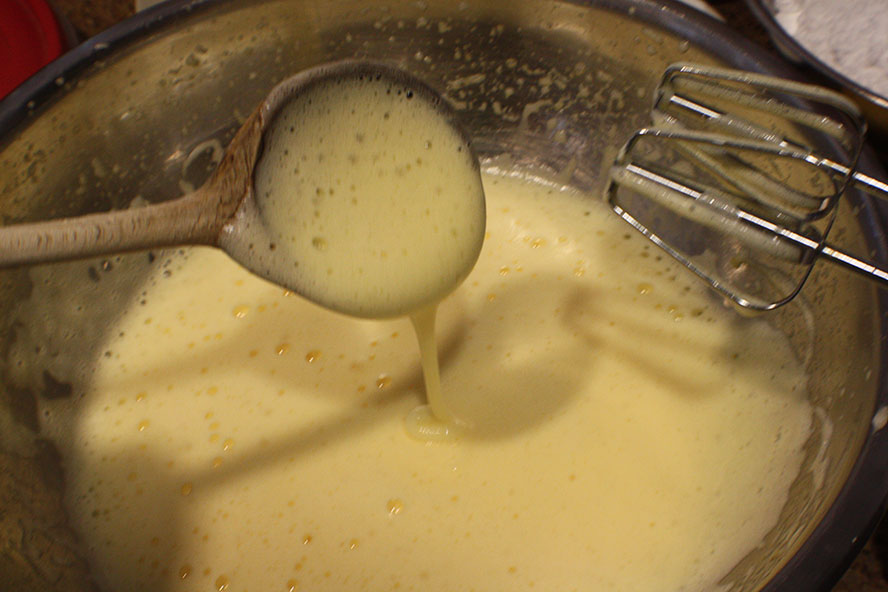
1 . Whip the eggs until they are light and fluffy, either with an electric mixer or by hand, in a large mixing bowl. Use your favorite mixing bowl, one that's large enough to really mix ingredients in, so you can "get into it“ without feeling that food will fly out the sides.
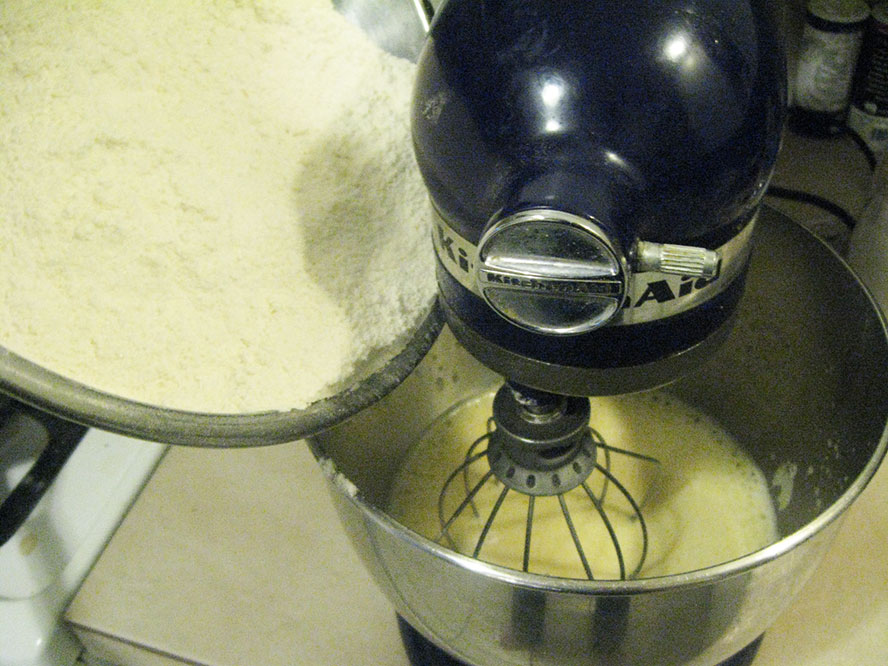
You can also use a stand mixer,
When adding the flour add just a bit at a time. thil it gets thick
Then use the paddle attachment.
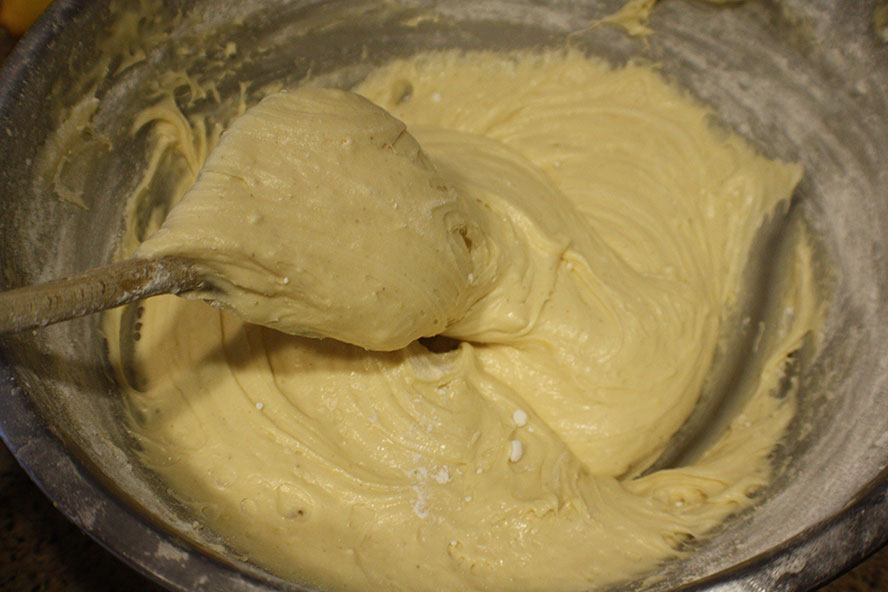
Mix in all the dry ingredients, including the optional ingredients, {except the whole anise seed) one cup at a time, until the dough is sticky and shiny-looking. At first my dough is a little to wet, so I added more flour, till you have a dough that holds together and is not too sticky, that you can firm it into a big round ball.
The dough looks very pretty, almost like wood that has been well sanded and varnished.
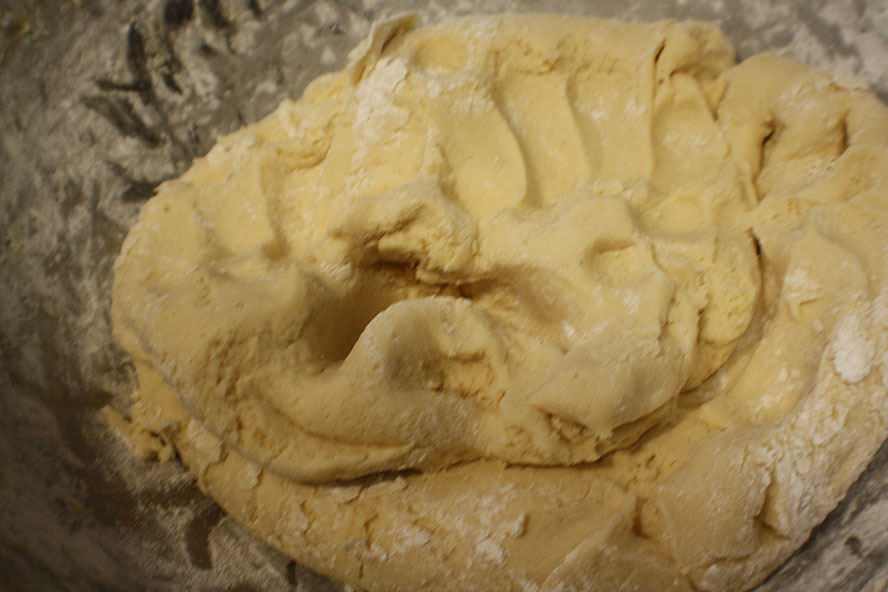
This is more how the dough looks like when it is the right consistency.
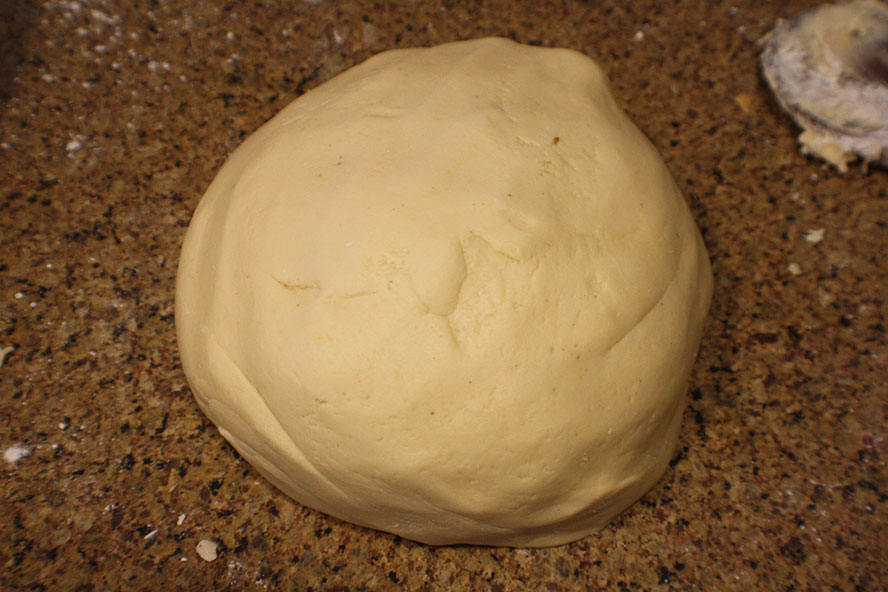
|
The dough looks very pretty, almost like wood that has been well sanded and varnished.
Put the dough, still in the mixing bowl, or to another container, in the refrigerator and chill thoroughly for at 2 hours. |
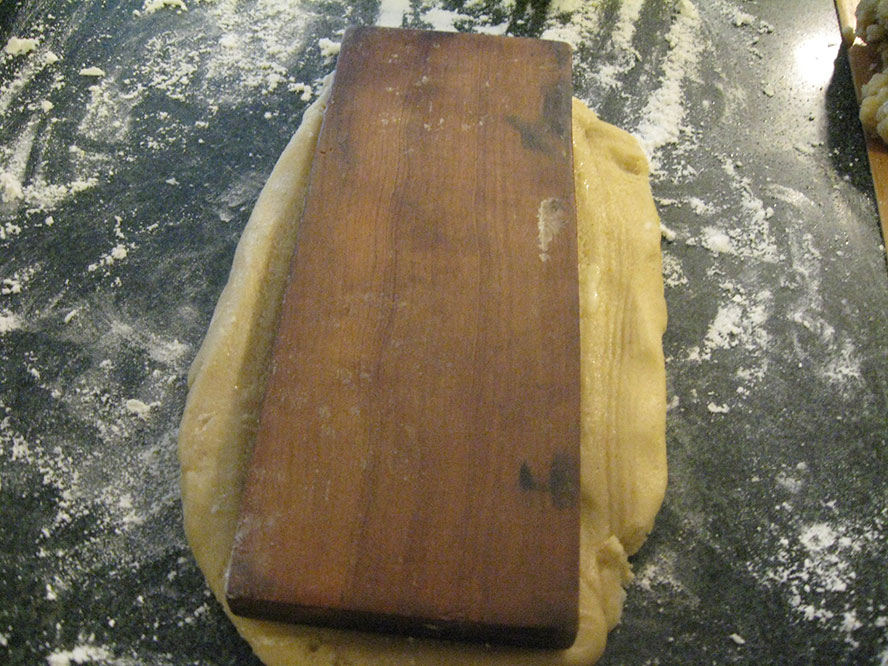
Sprinkle a little flour on the bread-board, take a piece of dough about the size of a tennis ball, and shape it into a rectangle about 2" by 3" and 1" thick. Here I am using a mold. and I just roll it out about 1/2 inch and press it in. I find it helpful to spray the mold with a non stick spray. Some dust the mold with cornstarch. |
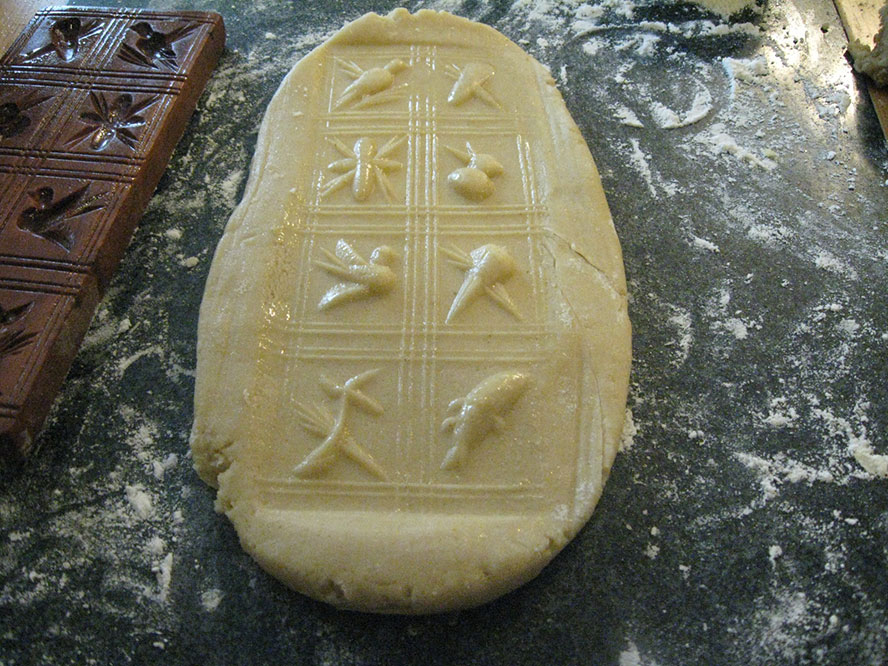
Do the same thing with the rolling pin. |
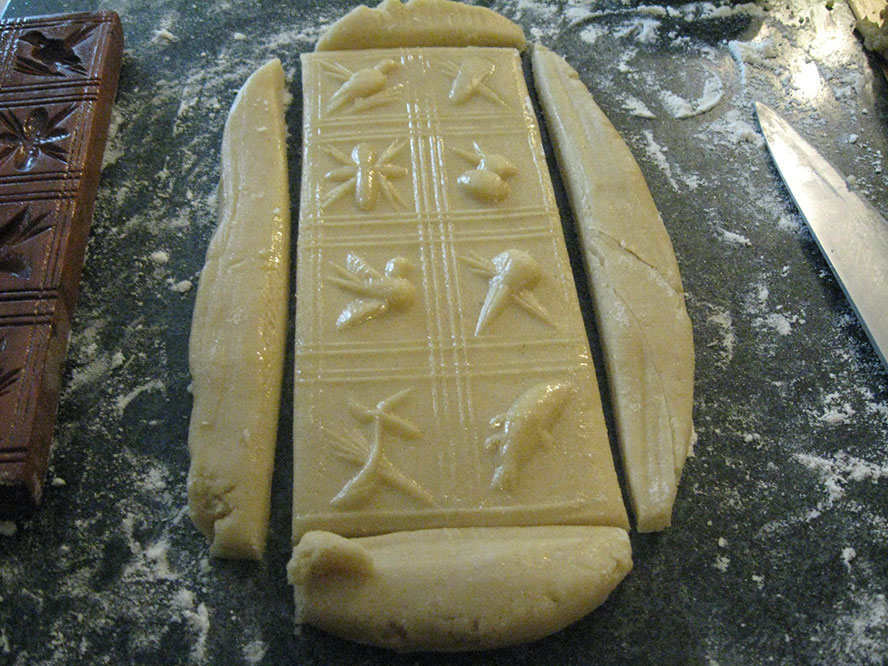
Lift up the mold and trim the sides.
|
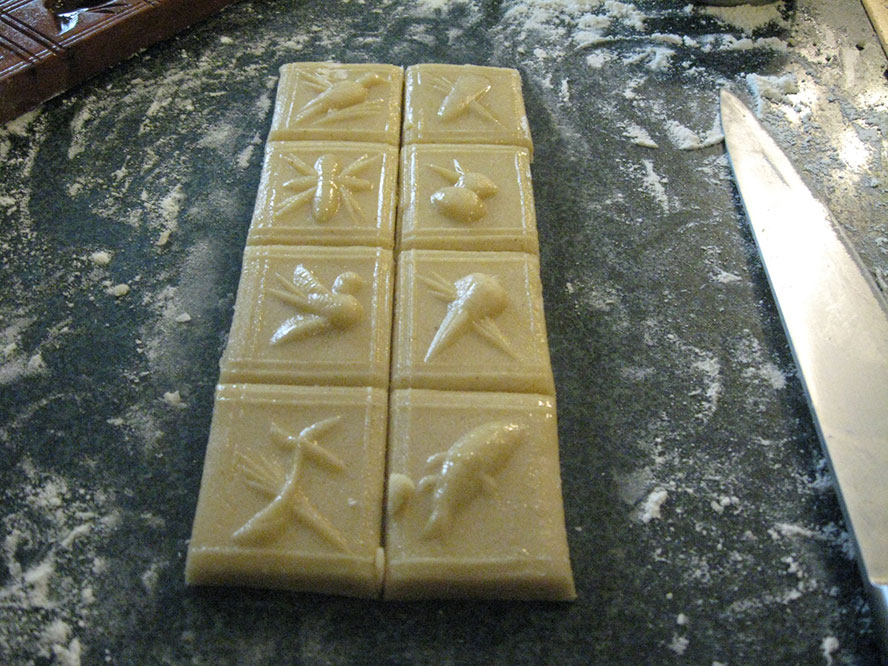
Lift the Springerle carefully. I like a thin icing spatula they use for cakes. |
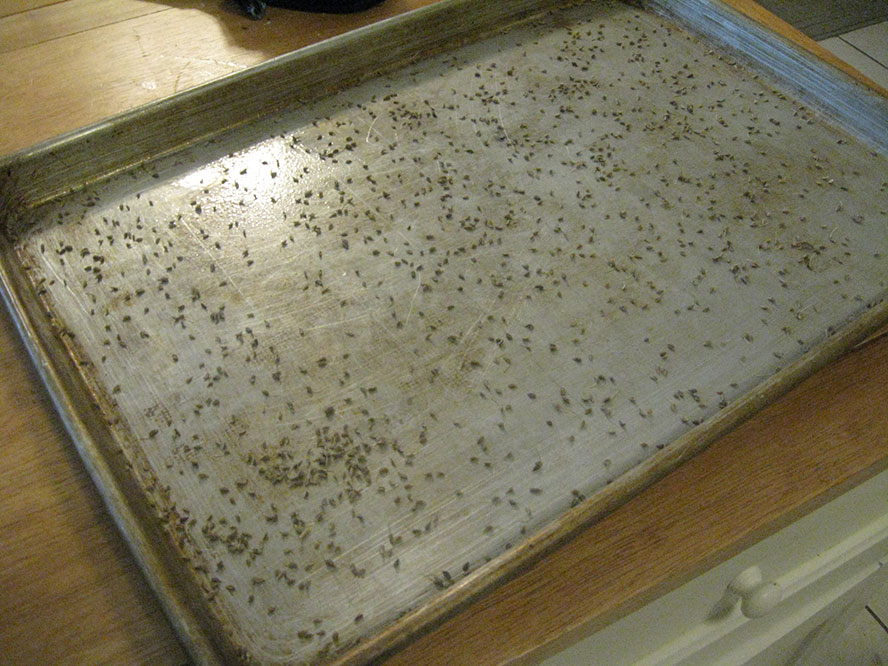
Spray the a pan with non stick spray and sprinkle with Anise seed. |
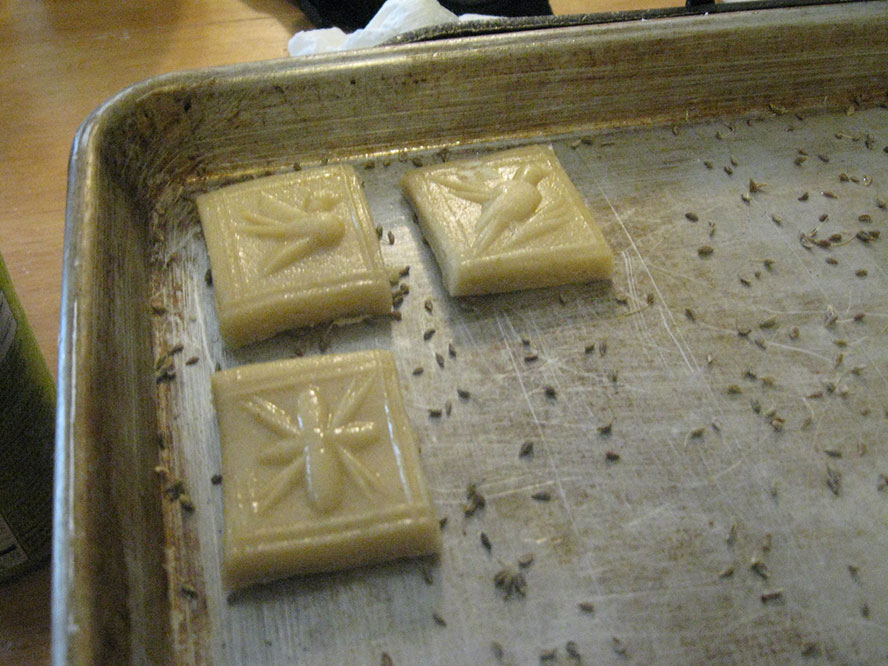
Place the cookies on the pan like this .
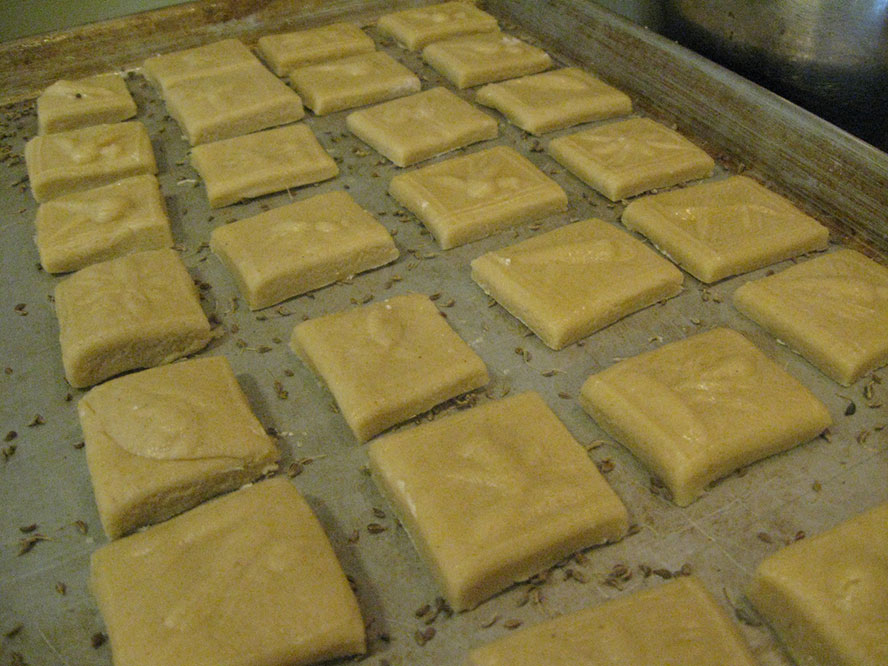
|
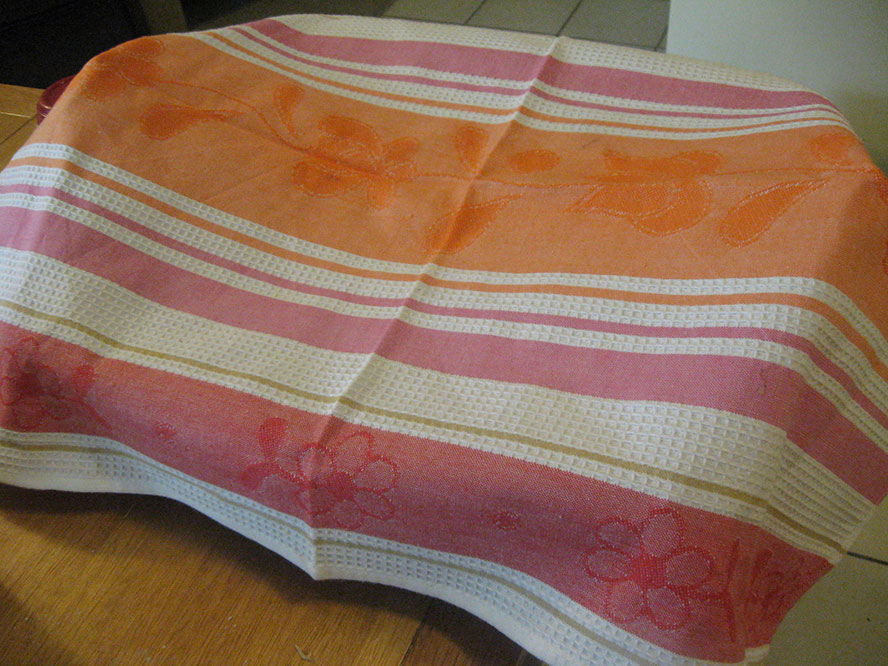
Put a dish towel over the pan and let it dry for a usually two days f or me.
The top needs to fully dry to keep he imprint intact. |
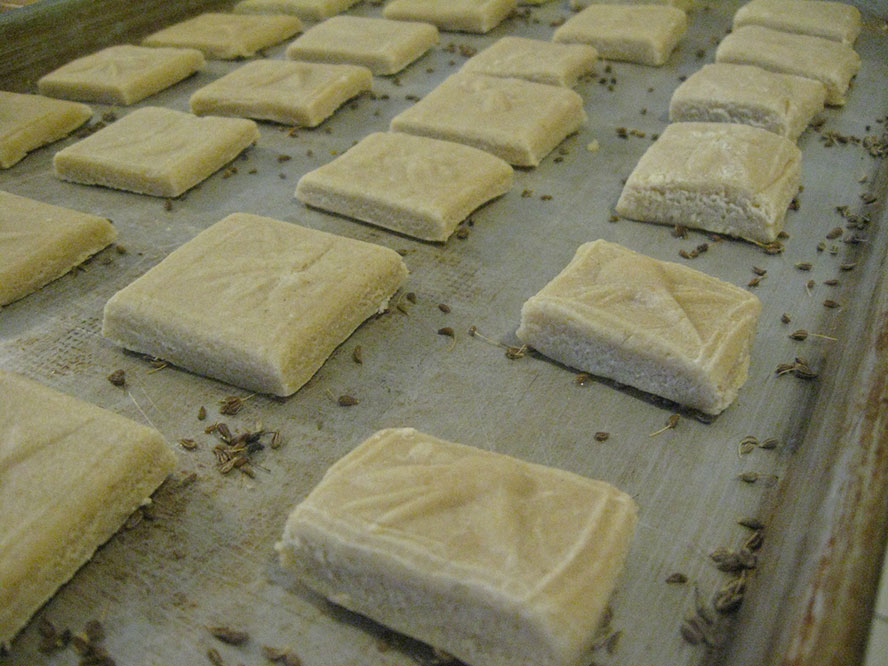 |
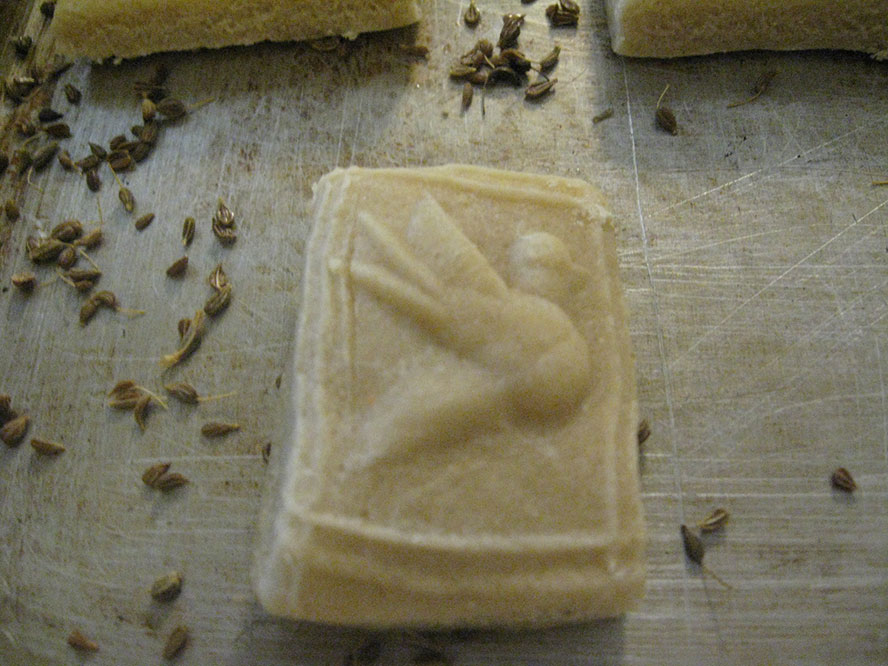
You can see here in these shots that t he top is looking dry, not moist to the touch at all. When the tops are dry then heat the oven to 275-300 degrees F
You may want to bake one cookie to see how it turns out. If it is not completely dry or your oven is too high the imprint will totally bake out. |
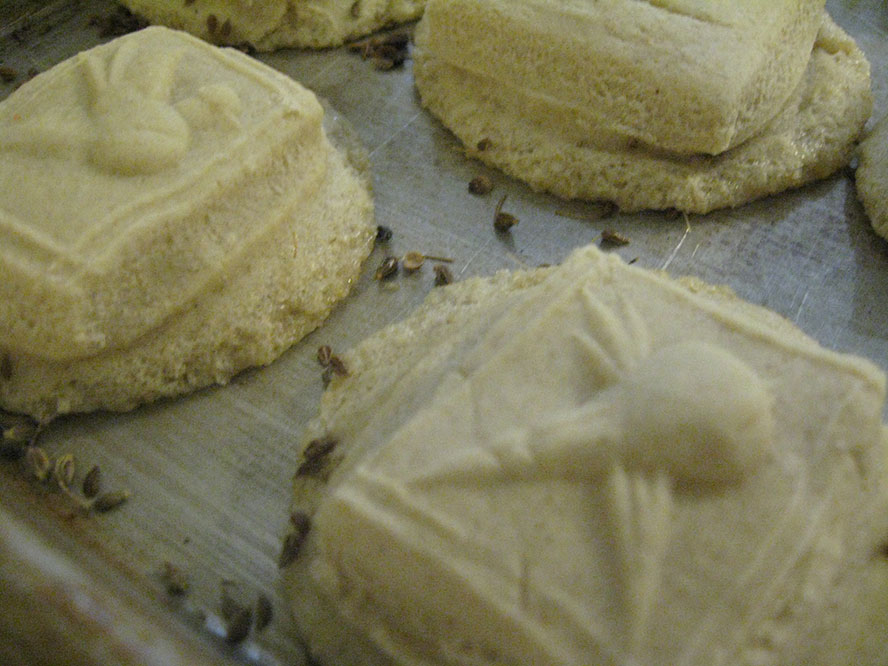
I bake the cookies 20 to 30 minutes. See how they have browned just slightly.
The sides and bottom spread out a bit. |
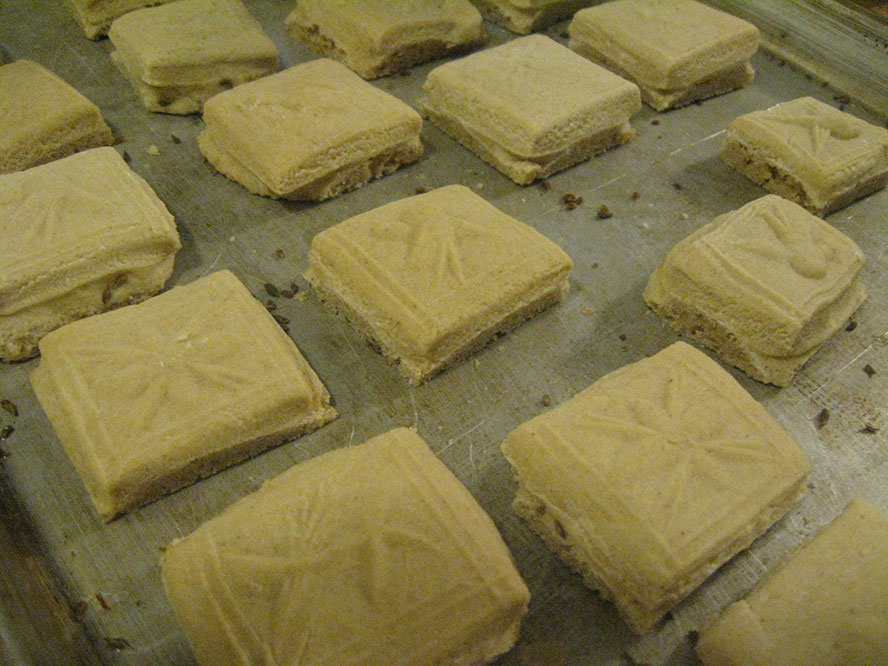
Here i have trimmed the excess dough off the cookie. |
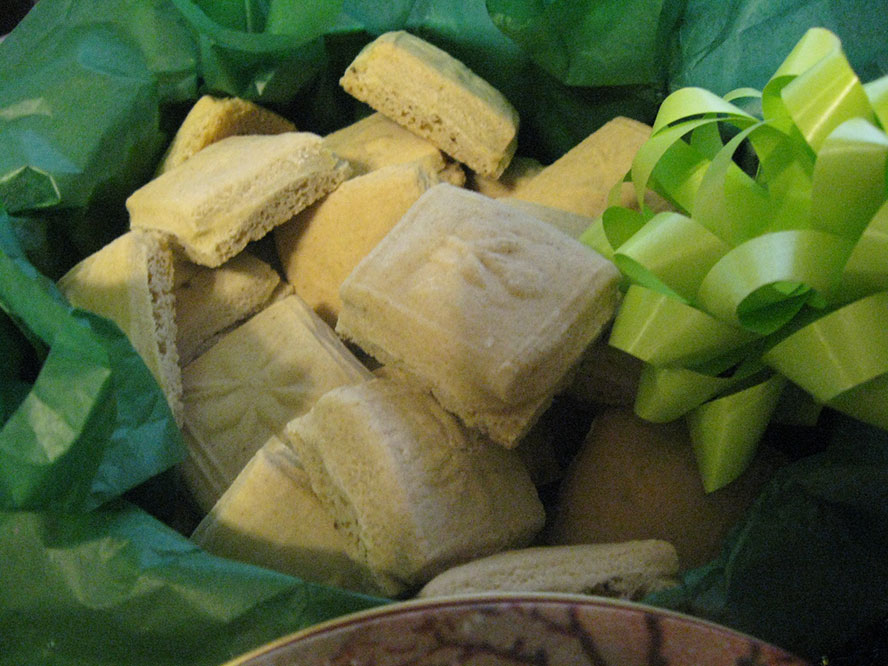 |
I keep them in a metal cookie tin or an airtight container.
They get better with age. |
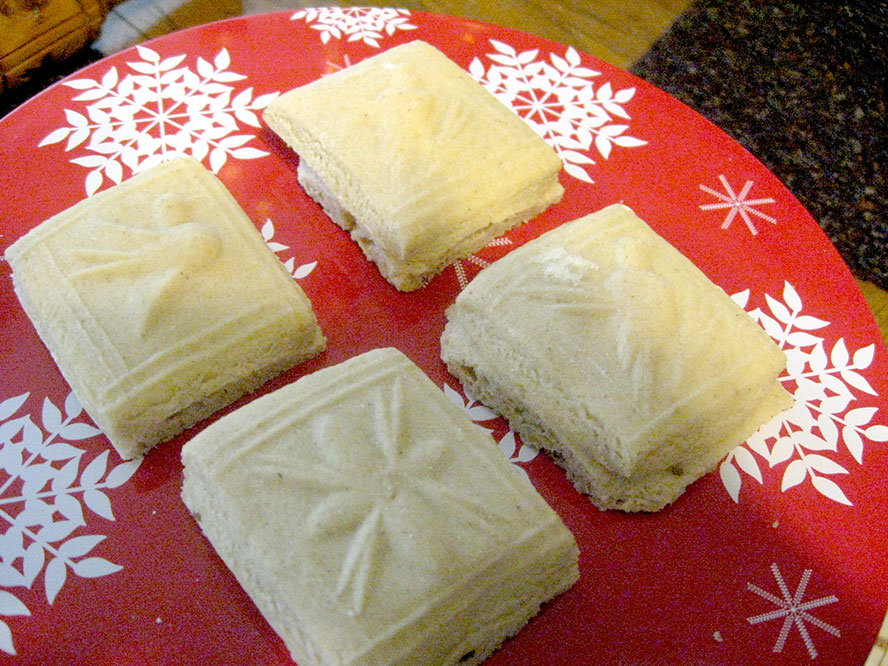
These are exceptionally good with coffee. Dunk them and take a bite.
Starbucks should take note. |
More on the History of Springerle
Springerle are traditional German anise-flavored cookies known for their elaborate embossed designs.
Their history spans over 700 years, originating in the Swabia region of southwestern Germany during the 14th century.
Key Historical Milestones
- Medieval Origins: The oldest known Springerle mold is a 14th-century wooden carving of an Easter Lamb from Switzerland, now kept in the Swiss National Museum in Zurich.
- Religious Significance: Originally, they were baked to honor Church Holy Days and biblical stories, serving as educational tools for those who could not read.
- Symbol of Wealth: In the 14th century, Springerle were considered luxury items for the wealthy because ingredients like white flour and sugar were expensive and rare.
- "Edible Greeting Cards": By the 15th century, the cookies were used as tokens for major life events, including births, weddings, and betrothals. During the holidays, they were exchanged much like modern Christmas cards.
- Apprenticeship Traditions: In Swabia, carving a Springerle mold was often a rite of passage for baking apprentices to prove their craftsmanship before becoming master bakers.
Etymology and Design Evolution
- The Name: "Springerle" translates to "little jumper" or "little knight". This likely refers to either the common motif of a leaping horse or the way the dough "springs up" (rises) during baking.
- Theme Shifts:
- 15th Century: Primarily religious symbols and biblical scenes.
- 17th–18th Century: Scenes of gallantry, such as knights on horseback.
- 19th Century: Romantic images like flowers, landscapes, and friendship symbols.
- 20th Century–Present: Modern holiday icons like Santa Claus and reindeer.
Traditional Baking Characteristics
- Unique Leavening: Historically, Springerle were leavened with hartshorn (baker's ammonia), originally made from ground deer antlers. This creates a crisp, fine-grained texture.
- Preserving the Image: To keep the intricate design from blurring, the molded dough must air-dry for 12 to 24 hours before baking to form a "crust" on the surface.
- Long Shelf Life: Due to their low moisture content and lack of fat (traditionally), they can be stored for months. They are often allowed to "ripen" for several weeks to soften and develop their anise flavor.
|
|
|
|
|
| Our German Cookbook |
|
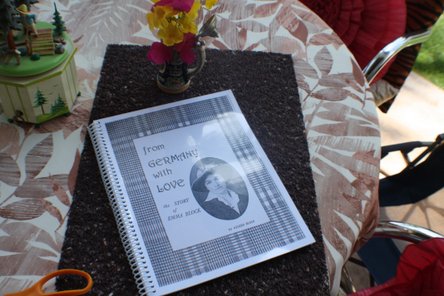
A recipe book and short biography of my Grandmother Emma Block. Her recipes, culture and cooking styles that were brought over from Germany. How they evolved when she came to America in the early 1900s and settled in Portland, Oregon on the west coast of the United States. Over 100 recipes
|
Bonus Recipe CD with the Ebook and recipes with step by step pictures
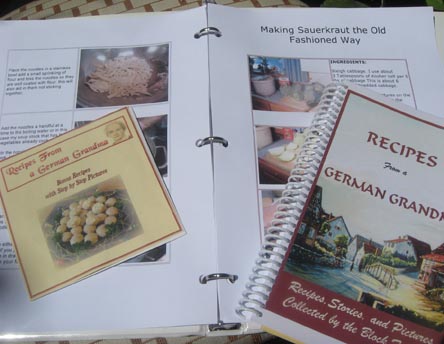
Look inside and check out a sample of our book |
|
| Order our Cookbook with the CD |
|
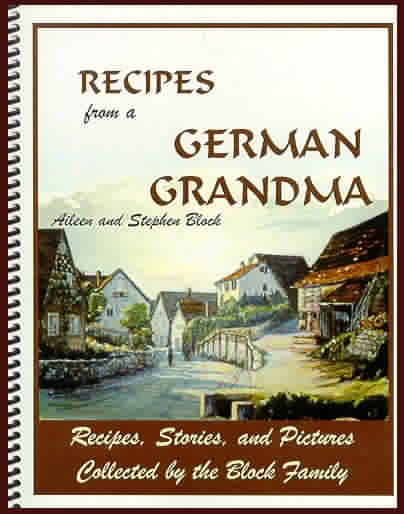
Order the Kindle Version |
 \ \
Biography of my grandma
Emma Block
From Germany with Love tells the story of my grandma, Emma Block, growing up in a little town in Baden/ Würtemberg, Germany near Heidelberg named Steinsfurt. Then at the age of 15 immigrating to the United States, taking a train with one of her sisters and brothers to Hamburg and sailing the Atlantic with other hope filled Germans wanting to make a life in the "New World". It was not easy but with good values learned in her German upbringing made a full life, had a wonderful family with lots of fun and celebration including the great German meals.
Order Here
|
|
|
|
Looking for another recipe?
Enter your recipe request and search
|
Where to shop for German Foods and Things
Do you have a question or comment on this recipe?
make sure you put the recipe name in the subject line
Listen to German Music
Listen to the Chicken Dance, and download it
CD's recommendations and links
Do you have a German Name?
Also what your German name means
Do you want to learn to speak a little German?
Learn one word a day.
Explore your German Heritage
Find out if your relatives came over through Ellis Island and more good links
Privacy Policy
Terms and Conditions
Disclaimer
Refund Policy |